
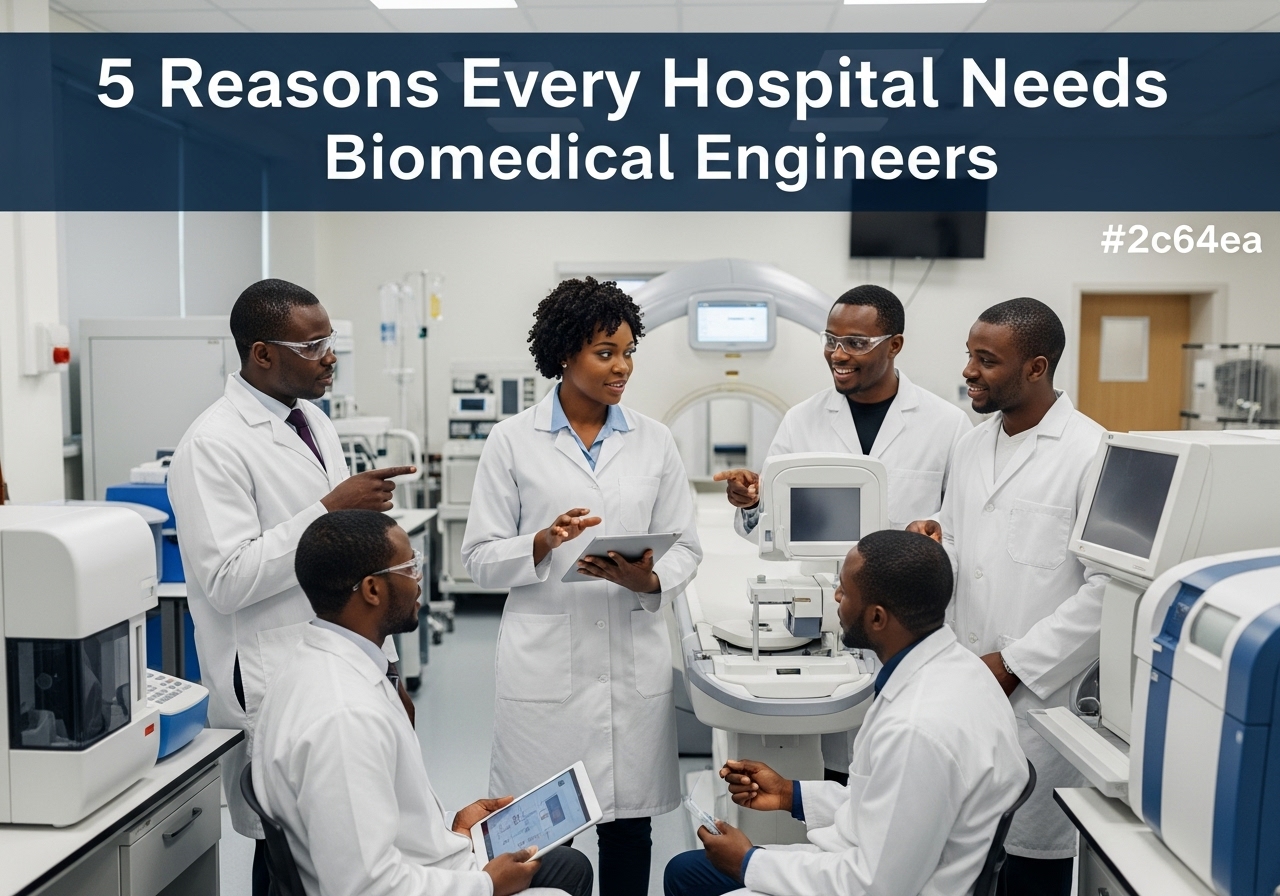
Discover why biomedical engineers are essential for modern Nigerian hospitals. Learn how their expertise improves equipment performance, safety, and cost efficiency — with support from Ocebrothers Tech Ltd.
Introduction: The Unsung Heroes of Modern Healthcare
Behind every successful hospital is a team that keeps its medical equipment running safely and efficiently. While doctors and nurses get most of the spotlight, biomedical engineers are the silent professionals ensuring that every device — from ventilators to lab analyzers — functions perfectly.
In Nigeria’s growing healthcare sector, where hospitals depend heavily on advanced technology, the role of biomedical engineers has never been more critical.
Here are five key reasons why every healthcare facility needs biomedical engineers and how they help hospitals operate smoothly, safely, and cost-effectively.
- They Ensure Equipment Reliability and Safety
Healthcare delivery depends on reliable equipment. A single malfunction can lead to misdiagnosis, delayed treatment, or even patient harm.
Biomedical engineers are trained to:
- Inspect, test, and calibrate equipment regularly
- Detect and correct performance faults
- Ensure devices meet safety and manufacturer standards
- Maintain up-to-date maintenance records
With a qualified biomedical team on-site, your hospital can avoid unexpected breakdowns and maintain safe, uninterrupted patient care.
- They Extend Equipment Lifespan Through Preventive Maintenance
Medical equipment is expensive — and replacing it frequently can be a financial burden. Biomedical engineers implement preventive maintenance programs that help extend the lifespan of medical devices.
Their maintenance duties include:
- Regular cleaning, servicing, and calibration
- Early detection of wear and tear
- Replacing faulty components before failure
- Keeping detailed maintenance logs
By prioritizing preventive maintenance, biomedical engineers protect your investment and ensure your hospital equipment remains functional for many years.
(See also: Why Preventive Maintenance is the Key to Longer Equipment Lifespan)
- They Improve Hospital Efficiency and Reduce Downtime
When medical equipment fails, entire departments can come to a standstill — delaying treatments and increasing patient dissatisfaction.
Biomedical engineers help prevent such disruptions by:
- Responding quickly to technical faults
- Reducing equipment downtime
- Coordinating with hospital equipment suppliers for spare parts
- Standardizing equipment usage and procedures
Efficient equipment management translates to smoother operations, faster patient service, and higher hospital productivity.
- They Support Smart Technology and Digital Integration
Today’s hospitals rely on internet-enabled medical devices and digital systems such as telemedicine platforms, EMRs (Electronic Medical Records), and hospital management software.
Biomedical engineers play a key role in:
- Installing and integrating new medical devices
- Networking systems with digital hospital platforms
- Ensuring cybersecurity and data compliance
- Training healthcare staff on safe equipment usage
Their expertise bridges the gap between medicine and technology, enabling hospitals to embrace the future of digital healthcare in Nigeria.
- They Help Hospitals Save Costs and Comply with Regulations
Hiring biomedical engineers is not just about technical support — it’s a cost-saving strategy.
Here’s how they add long-term value:
- Reducing repair and replacement expenses
- Ensuring compliance with regulatory bodies like MDCN and SON
- Preventing costly equipment downtime
- Helping with equipment procurement and evaluation
With proper documentation and quality control, biomedical engineers help hospitals stay compliant, efficient, and financially stable.
Bonus: They Strengthen Your Relationship with Medical Equipment Suppliers
Hospitals that employ in-house or contracted biomedical engineers enjoy better collaboration with medical equipment suppliers in Nigeria.
These professionals understand technical specifications, enabling clearer communication when purchasing, installing, or upgrading hospital setup tools.
By partnering with experts like Ocebrothers Tech Ltd, biomedical engineers can access original spare parts, reliable calibration services, and ongoing technical support.
Conclusion: Biomedical Engineers Are Vital to Hospital Success
Every Nigerian hospital, whether large or small, depends on medical technology to deliver quality care. Without biomedical engineers, that technology becomes vulnerable, inefficient, and unsafe.
By hiring or partnering with qualified biomedical engineers, your healthcare facility gains:
- Reliable and safe medical equipment
- Longer device lifespan
- Reduced downtime and operating costs
- Improved compliance and patient trust
At Ocebrothers Tech Ltd, we provide expert biomedical engineering services, preventive maintenance programs, and professional training for hospitals across Nigeria.
Contact Ocebrothers Tech Ltd today to schedule a maintenance consultation or partner with our certified biomedical engineers.
Together, we’ll keep your hospital equipment working at its best — every single day.