Learn what calibration means in medical equipment, why it’s essential for patient safety, and how Ocebrothers Tech Ltd ensures accuracy and compliance through expert calibration services in Nigeria.
Introduction: The Hidden Backbone of Safe Healthcare
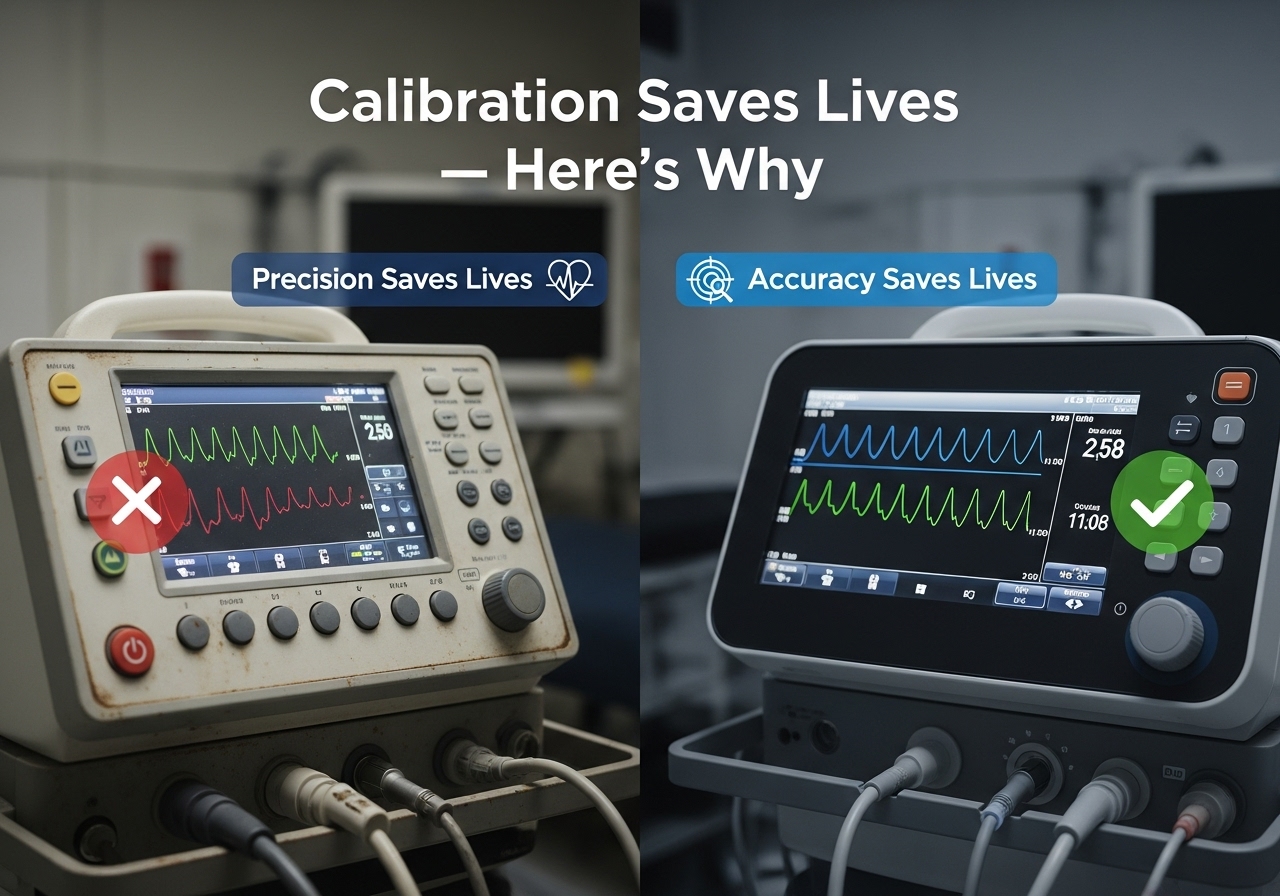
In every modern healthcare facility, accurate data saves lives.
When a blood pressure monitor, infusion pump, or oxygen analyzer gives incorrect readings, even by a small margin, it can lead to wrong diagnoses or dangerous treatments.
This is where calibration plays a vital role.
Calibration ensures that every piece of medical equipment provides precise, reliable, and consistent results — the kind of accuracy that healthcare professionals rely on every second.
What Is Calibration?
Calibration is the process of comparing the measurement values of a medical device to a known, trusted standard (called a reference standard) and adjusting it if necessary to correct any deviation.
In simple terms:
Calibration ensures your equipment is telling the truth.
For example, if a thermometer reads 38.5°C while the actual temperature is 37.5°C, calibration corrects that error and restores accuracy.
Why Calibration Matters in Healthcare
1. Ensures Patient Safety
A minor error in a medical device’s reading can have serious consequences.
An over-infusing infusion pump or under-reading blood pressure monitor could endanger a patient’s life.
Regular calibration prevents these risks by ensuring every device performs within safe and acceptable limits.
- Guarantees Diagnostic Accuracy
Doctors depend on accurate data to make critical decisions.
If devices like ECG machines, lab analyzers, or X-ray systems are not calibrated, the results may be misleading — leading to misdiagnosis or delayed treatment.
Calibrated equipment ensures trustworthy readings, allowing for timely and correct patient care.
- Maintains Equipment Reliability
Over time, all equipment drifts from its original accuracy due to wear, environmental changes, or regular use.
Calibration detects these drifts early and restores optimal performance.
This helps hospitals reduce downtime, extend equipment lifespan, and avoid costly repairs.
- Meets Regulatory and Quality Standards
Healthcare facilities in Nigeria — whether private, government, or diagnostic centres — are expected to comply with international standards such as ISO 9001 and ISO 13485.
Routine calibration demonstrates:
- Compliance with medical device regulations
- Commitment to patient safety
- Quality assurance in hospital operations
Ocebrothers Tech Ltd follows globally accepted biomedical calibration procedures that align with World Health Organization (WHO) and manufacturer guidelines.
- Enhances Hospital Reputation
Patients and partners trust hospitals that invest in quality and safety.
Well-calibrated devices reflect a hospital’s professionalism, reliability, and dedication to accurate healthcare delivery.
It’s not just about compliance — it’s about earning patient confidence.
Which Medical Devices Require Regular Calibration?
Here are some common hospital devices that must be calibrated regularly:
- Patient Monitors (Blood Pressure, SpO₂, ECG)
- Infusion and Syringe Pumps
- Autoclaves and Sterilizers
- Laboratory Analyzers
- Weighing Scales and Thermometers
- Suction Machines and Oxygen Concentrators
- X-Ray and Ultrasound Equipment
Each of these devices affects diagnosis, treatment, or patient safety — making calibration non-negotiable.
How Often Should Calibration Be Done?
Calibration frequency depends on:
- Manufacturer recommendations
- Usage intensity
- Environmental factors
- Type of equipment
Generally, most hospitals conduct calibration:
- Annually for standard devices
- Quarterly or bi-annually for high-use or sensitive equipment
Ocebrothers Tech Ltd provides a custom calibration schedule for each hospital, ensuring compliance and continuous accuracy.
How Ocebrothers Tech Ltd Supports You
At Ocebrothers Tech Ltd, we specialize in:
- Professional calibration services for all major medical devices
- Preventive maintenance and testing
- Certification and documentation for audit or regulatory compliance
Our biomedical engineers use traceable reference standards and follow strict quality protocols to ensure each device meets international accuracy benchmarks.
We don’t just fix equipment — we protect patient safety through precision.
Conclusion: Accuracy Saves Lives
Calibration may seem like a technical detail, but it’s one of the most important pillars of patient care.
Every accurate reading, every safe dosage, and every correct diagnosis depends on properly calibrated medical devices.
Hospitals that invest in regular calibration not only meet standards — they save lives, reduce risk, and build trust.
Partner with Ocebrothers Tech Ltd today for professional calibration and biomedical maintenance services that keep your equipment — and your patients — safe.